
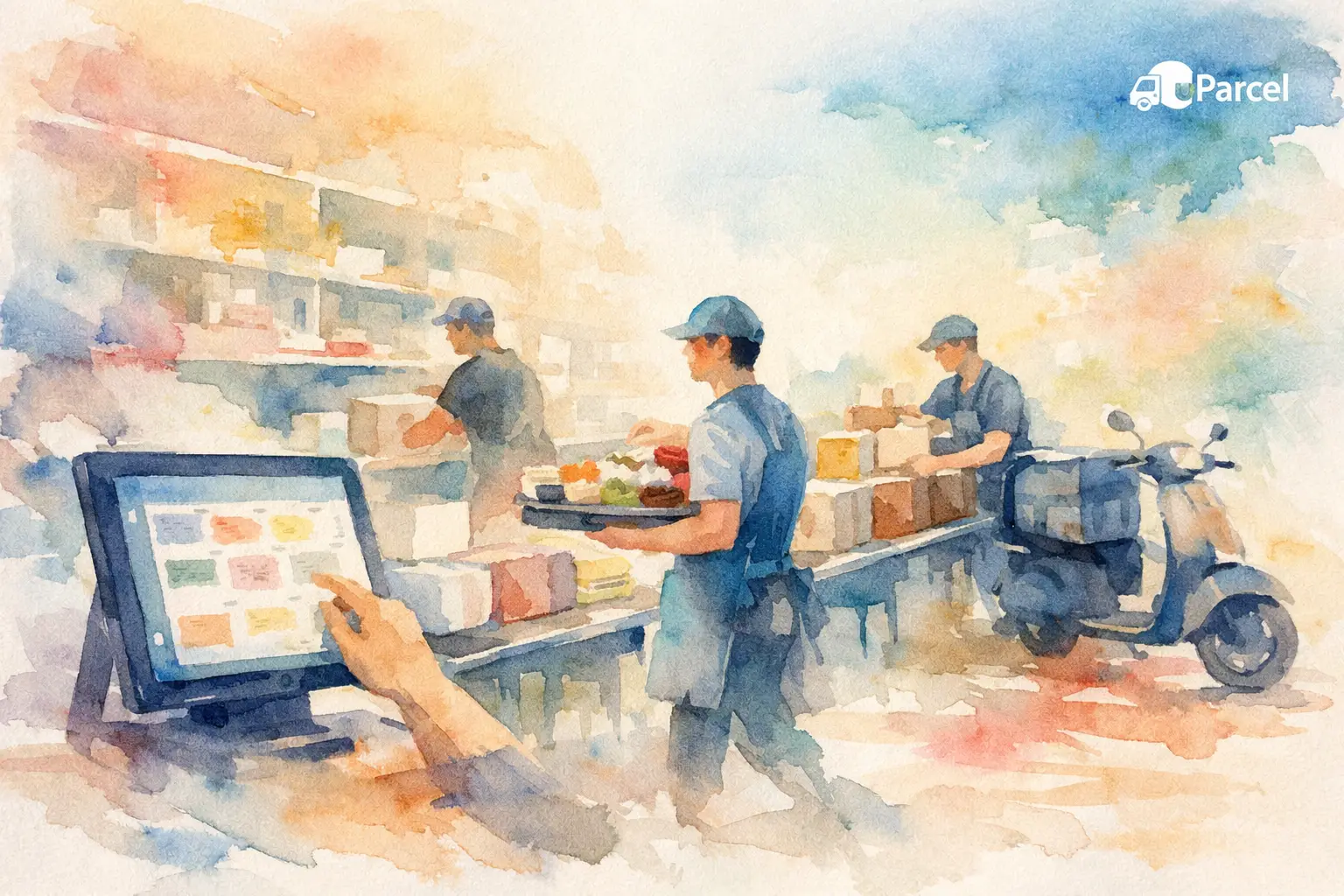
A live selling session can turn a quiet Tuesday afternoon into a small retail stampede. One moment the host is holding up a skincare set; 90 seconds later, 400 people have typed “mine”, checked out, and expect their parcel to behave as if it has been waiting patiently for them all along. That is how live orders are fulfilled at their most demanding: not as a series of boxes, but as a race between attention, stock and expectation.
For shoppers, live commerce feels immediate. For the business behind the ring light, it is immediate in the same way that a kitchen feels calm five minutes before the dinner rush. The sale is won on screen, but the reputation is earned in the warehouse.
Live selling creates a different kind of order rush
A conventional online shop receives orders in a reasonably scattered pattern. Someone buys at breakfast, someone else at lunch, and a third person makes a questionable purchase decision at 1.13am. Live sales compress that demand into a short, sharp window.
That compression changes the job. A brand needs accurate stock before the stream starts, fast confirmation while it is running, and a disciplined fulfilment process after it ends. If any part falls behind, the host may still be charming, but customers will notice that their order has become a mystery with tracking updates.
The core problem is not simply volume. It is synchronisation. The product shown in a TikTok Shop live, Shopee live, marketplace flash sale or brand-hosted stream must match the stock count, price, promotion, bundle rules and delivery promise visible to the customer.
Before the cameras roll, stock needs a reservation plan
The cleverest fulfilment decision is often made before the first “add to basket”. Brands should decide which stock is allocated to the live event and how much is held back for other sales channels.
Imagine selling 500 limited-edition tumblers across a website, Shopee and a live studio at the same time. If each channel believes it has all 500 available, the business has accidentally sold 1,500 tumblers. This is not ambitious commerce. It is administrative fan fiction.
A connected inventory system helps keep one stock position across channels. When an item sells during the live session, the available quantity should update quickly enough to prevent overselling elsewhere. There can still be a small delay between platforms, particularly during heavy traffic, so sensible brands build in a buffer rather than selling the final unit three different times.
Bundles deserve their own caution. A “buy two, get one free” offer sounds simple until the free item is also selling separately and has become the star of the evening. Good order rules break bundles into their individual stock components while keeping the customer-facing order intact.
The packing bench should be prepared like a stage set
Live orders move faster when best-selling items are placed close together, packaging is ready, and pickers know exactly what the promotion includes. This does not mean pre-packing every possible order. That creates waste and makes personalisation awkward. It means arranging stock so the predictable winners do not require a warehouse expedition.
For a sale featuring 20 products, the top five may generate most of the orders. Those are the items that deserve accessible pick faces, enough cartons, and a clear replenishment plan. The rest can remain in normal storage without holding up the entire operation.
How live orders are fulfilled after checkout
Once payment is confirmed, the order must travel from the selling channel to the system used for fulfilment. This is the point where manual copying starts looking cheap and ends up expensive.
If staff are downloading spreadsheets, checking screenshots or reading comments to work out who bought what, errors become almost inevitable. A live stream produces too much speed and too much repetition for heroic spreadsheet work. Orders need to flow into one queue with the customer’s delivery details, product lines, promotion rules and chosen service level attached.
The warehouse then follows a sequence that is reassuringly unglamorous:
- Orders are checked for payment status, address issues, duplicate purchases and possible fraud flags.
- The system creates a picking task, often grouping similar products so staff do not walk the same aisle 200 times.
- Items are picked, scanned and matched to the order before packing.
- The parcel receives the correct label and carrier service, then enters the dispatch handover.
That scan between picking and packing is where many preventable mistakes are caught. A customer may forgive a slightly battered carton. Receiving somebody else’s collagen powder, birthday gift or novelty duck lamp is harder to romanticise.
Batch picking is particularly useful after a successful live. Rather than completing one order from start to finish, a picker collects quantities for several orders in a single route, then sorts them at a packing station. It saves walking time, which sounds minor until a team has travelled the equivalent of a modest hiking trail between 8pm and midnight.
There is a trade-off. Large batches can be efficient but harder to sort accurately. Smaller batches are easier to control but may slow the operation. The sensible batch size depends on product variety, order complexity, warehouse layout and how experienced the team is. There is no prize for choosing the biggest number on a whiteboard.
Delivery promises should match the clock, not the mood
Live sellers are tempted to promise next-day delivery for every order because urgency helps sales. The promise only works if the fulfilment cut-off, carrier collection time and delivery capacity support it.
An order placed at 10.45pm cannot magically board a van that left at 6pm. Customers are generally reasonable when the delivery estimate is clear. What they dislike is being told “ships tomorrow”, only to see a label created for three days before the parcel actually moves.
For Singapore-based live commerce, short delivery distances can make same-day or next-day options realistic, especially for orders received early enough to enter the picking queue and meet a collection cut-off. Malaysia introduces wider geography and more variable transit times, so brands should set expectations by destination rather than applying one cheerful promise to every postcode.
The best customer message is specific: order confirmed, being packed, handed to the delivery network, and out for delivery. It is not glamorous copywriting, but it prevents the customer from sending “Hi, where is my order?” while the parcel is still politely waiting for collection.
Returns and cancellations are part of the live-order equation
A fast sale can create fast regret. Buyers may accidentally check out twice, choose the wrong variant during a frantic countdown, or discover that the item looked much larger when held close to the camera.
This is why brands need a clear cancellation cut-off. If a request arrives before picking begins, it can often be stopped. Once a parcel has been scanned, packed and placed in a dispatch cage, cancelling it becomes more complicated and more costly. Clear policies protect the customer service team from becoming detectives at 1am.
Returns should also feed back into inventory records. A returned item may be unopened and ready to sell again, damaged, incomplete or unsuitable for resale. Treating all returns as available stock is a neat way to send disappointment out twice.
The difference is control across the whole chain
Live commerce exposes weak handovers. The marketing team knows what was promised, the studio knows what was demonstrated, the warehouse knows what was packed, and the delivery team knows what was collected. If these groups operate as separate islands, customers end up swimming.
That is why multi-channel fulfilment matters more than a room full of shelves. A commerce-enabled operation can manage marketplace orders alongside direct sales, keep stock visible on the cloud, and place live studios close to fulfilment activity rather than treating content and operations as distant cousins.
uParcel supports this model in Singapore and Malaysia with its own engineering, fleet network, warehouse and commerce teams under direct control. For a growing seller, that matters when a live event suddenly outperforms its forecast: the people investigating a stock discrepancy or delivery delay are working from the same operational picture, not passing a ticket through four different companies.
The real test of a live sale is not how many comments say “sold”. It is whether the right item reaches the right person without the business needing a midnight group chat, three apology vouchers and a founder personally hunting for cartons. Build the fulfilment plan before the host says hello, and the rush can feel less like chaos and more like proof that people wanted what you made.
Leave a Reply